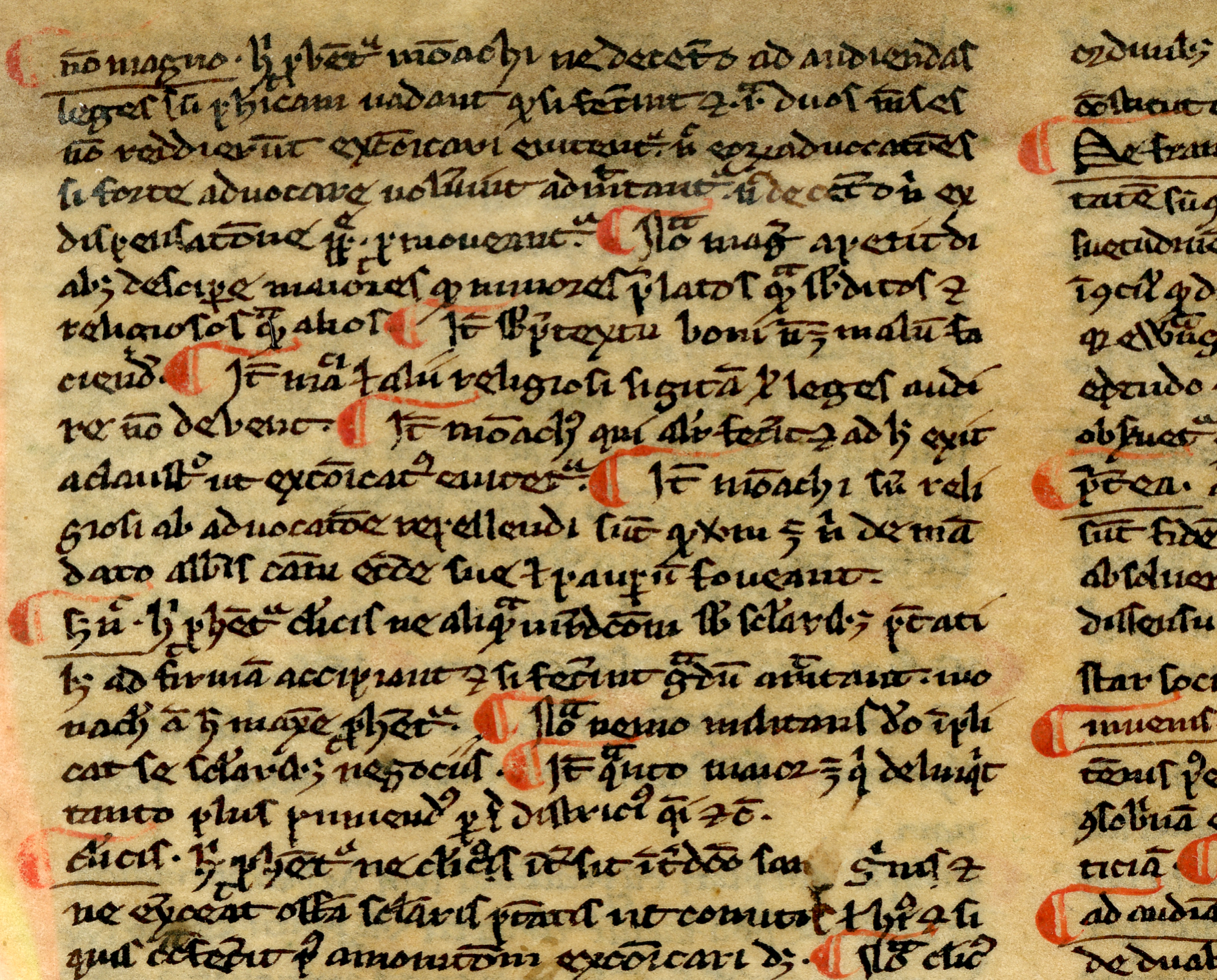
The Visage of Vellum

Oral interviews and pursuing an individual’s story through the mode of videography has become a passion of mine during my undergraduate degree. In my third year I had opportunity to work with Professor John Walsh in a historical practicum course during which myself, and another student, performed oral interviews with long-time members of the Alpine Club of Canada. Being able to engage with people on a personal level, with all the emotional navigation that accompanies it, allowed me to encounter a history that was not merely held in books or journals but in people’s lived experiences, in their visages. Seeing a person’s face change and hearing their vocal inflections when they are leading their mind through the memory palace of their experiences is truly something to behold and makes history much more alive than, dare I say it, a book. For the final project in HIST 4006 A I had the opportunity to yet again sit down with individuals, this time peers of mine, and flush out their experiences handling Medieval manuscripts.

Lyn Abrams notes that oral history is more than just asking a question and getting an answer but that the interview is, “a give and take, collaborative and often cooperative, involving information-sharing and autobiographical reminiscence, facts and feeling.” (1) Abrams principle of fluid dialogue and a built relationship between the interviewee and interviewer was something that I applied to each interview I conducted for this project. Before the interview would begin I reminded the interviewee that it would be very informal and not to worry about answering all the questions I had; I wanted the interviews to be as organic as possible and not push an agenda filled with assumptions. As I interviewed my peers a golden thread slowly began to emerge from the great tapestry of interwoven encounters: the experience of physically handling the manuscripts. Each one expressed their surprise of being allowed to handle a 500 year old, in some cases older, manuscript. They talked about being able to feel the parchment, the gesso from the illuminations, and utilizing new skills to determine provenance and genre. The more the interviews carried the more my peers noted the uniqueness of their experiences within Digitizing Medieval Manuscripts.

Part of the reason I thought it would be a wonderful idea that the project website host videos was to not only showcase the work done by students, but also to allow the students to curate their own experiences and by doing so put a face to these manuscripts, a face filled with experiences of its own. These interviews were also a great time of self-reflection to wrestle with the reality that we were not only enabling greater accessibility to these manuscripts through curating an exhibition, online and analogue, but also that we had become “producers of knowledge” (To borrow Professor Saurette’s words). It is my hope, and that of my peers, that our scholarship throughout this project will enable other Carleton students to grasp the potential available to them while studying in University and hopefully spur them onto to become contributors and collaborators of these manuscripts in future projects. That they will weave their experiences into the tapestry of academia and stand back and marvel at their accomplishments, just as we have ours, and say “There is more to be done”.


  • Abrams, Lyn. Oral History Theory. 2nd ed, New York: Routledge, 2016, p. 21.


Post Exhibit Reflection

The final week (half week?) of school has arrived – my absolute final week of undergraduate studies is almost over and to be honest, time really does fly by. It definitely does not feel like four years have flown by.
Last week, we launched our medieval manuscript exhibit that our entire class has been working on the whole semester. It was such a success! The exhibit team did such an amazing job at creating everything, it honestly looks like a professional exhibit. The team leader of the exhibit team, Veronica, put her heart and soul into this exhibit and it really showed – it really is a fantastic exhibit. The exhibit is currently on display on the 4th floor of Paterson Hall at Carleton University, so if you’re by chance reading this or in Ottawa, go see it! If not, go check out our website Medieval Ottawa! The website team did an exemplary job adding in all the information on the medieval manuscripts that were chosen for the exhibit. On each manuscript there is even a sound clip that allows the viewer to hear what the manuscript sounds like in medieval Latin!
My job for the exhibit was the social media team (or the publicity team), along with my fellow team member, Paige. Our job was to basically give publicity for the exhibit by creating an Instagram where we posted “sneak peaks” of the medieval manuscripts we had chosen. We also created flyers and posters for the exhibit, which were placed around campus. Even though the project is technically over, I would like to keep up with the Instagram until our professor decides he wants to take it over or give it to his next class.
This exhibit process was an amazing experience; it was almost like receiving a behind-the-scenes look at how exhibits in museums are actually created. A lot of thought and editing goes into those tiny blurbs you see in museums! It was also a cool experience to deal with the social media aspect of it as well; for such a new account we quickly escalated to 168 followers and were receiving interactions from cities such as Paris, Rome, and New York! Our latest photo gathered as many 800 interactions, meaning around 800 people viewed the photo (now if only everything single one of those people had liked the photo!).
Nothing could have been as organized if it had not been kept in line by our project manager Trina – she did an amazing job as well! She has a knack for organization and she was luckily there to remind everyone of their duties – and to update our project board on Trello, to which I hope she has forgiven me for taking forever to update it.
This was a fantastic semester and I am sad that it is ending, but I feel so accomplished with everything that we have done as class. Everyone did such a great job!

Who Knew Manuscripts Would be a Social Media Hit?

Being on the social media team meant I spent a lot of time on social media, scoping out similar accounts and related content to try and grow our online presence with people who would appreciate our content instead of bots and it is a whole different world out there. Academic Twitter or Medieval Twitter is an already established community where academics can collaborate and ask questions, or make funny jokes and it is a great space to be apart of. Instagram  (@medieval_book) is less of an academic space since most of your media is consumed through photographs and many people neglect to read the captions because of mindless scrolling. I was pleasantly surprised at how many medieval accounts are on Instagram and the mini community they have. Most of it is looking at interesting marginalia, or looking at beautiful manuscripts but one thing I found is that everyone in that community follows one another help try and grow the community. It kind of overlaps with the calligraphy community and the meme genre since you can make some great memes from marginalia or manuscripts.

I also found a lot of sellers form auction houses selling manuscripts on Instagram which I thought was an interesting thing to do on this platform, but it kind of made sense since it is such a photo based social media platform. By the time of our exhibit launch, our Instagram account grew to 168 followers and an average of 50 likes per post which is incredible engagement for such a niche community. The account is also only two months old so that is incredible growth. I wish we could keep the account running, and continue to post more to it in hopes we can gain more engagement and attract more people to medieval studies, and history in general because I do not want this field to die out.  I love history and hope our online presence continues to go and take over the world 😉

IIIF and Project Mirador

For the exhibition website we had planned to implement a IIIF viewer for the display of the manuscripts as we had seen many examples of through the semester.  For this we decided to select the open source Project Mirador viewer due the nature of it being one of the largest projects. However our efforts ran into issues due to the fact that it is an actively and rapidly developed project, this meant that a lot of the projects documentation is left unfinished or still work in progress.  This led to many issues in trying to implement the project and after a period of experimentation and work we eventually had to change to try and find a different option this led to us attempting to use several different IIIF viewers such as openseadragon, a far more lightweight program, but we also failed to be able to get those to work.  After the failures in trying to succeed in getting either  of the IIIF viewers to work we settled on using a simple image zoom tool to view the images.  The struggles we encountered in these attempts demonstrated one of the main problems with open source projects in that no matter how good the actual project is that they are producing if they haven’t taken the steps to properly document there processes and steps using the software becomes extremely difficult to use, in an ideal world of course all programs and projects would have detailed in depth documentation and assistance, of course though when you are developing a project and are focusing on making it work and become high quality to stop and go back to do that can easily become a low priority task.

Accessibility in digital humanities

The idea and use of accessibility in the digital humanities is a two sided debate encompassing the use of differing means of presentation to present material to those with disabilities and to make the materials more open to the general public as well.  There are many people who have difficulties with the presentation of material in traditional ways of exhibition with items displayed visually, there are and exist many ways that this barrier can be lowered, including the addition of tactile and audio components to projects. This whole area of adding non-visual components can be easily and furthered through the use of digital and online aspects which allow for both more advanced accessibility features common in most modern technology that can make even visual aspects far more widely accessible, the use of digital technologies also allow further features to be added such as, video and described video which would be difficult and problematic in more physical spaces and presentations.  The use of digital and online components can also allow for even greater access to an exhibit and presentation of material, with the creation of supporting websites.  Through the use of these digital methods it can allow for people who otherwise could not attend or see material to be able to see and in some case still experience the same affects as that found in the physical space through the use of 3-D video and recordings of spaces.  As well the ability for very high quality images and scans of material, coupled with higher quality screens and more accurate advanced software and frameworks, such as IIIF and UHQ screens, allow for much greater access and interactivity with material that can not be physically viewed.  These abilities to use digital media in more advanced fashion allow for exciting opportunities for the digital humanities